What Is an Aura?
A working aura definition for presence and attention — symbolic language, not a measurable field around the body.
What is an aura as everyday atmosphere
What is an aura, if you ask this page? A practical aura definition starts with atmosphere, not with a photograph of light. Dictionaries call it a distinctive quality that seems to surround a person or a place. Some spiritual teachers describe a colored field. Loretypes treats aura meaning as a symbolic language for the mood, manners, and attention you bring into a room. We do not treat it as a measurable glow, a health scan, or a hidden organ. Entertainment and self-reflection are the job. A lab claim is not.
The same word also lives in other rooms, and those rooms should stay labeled. On a caption, “aura” can mean magnetic cool — the person who quiets a lobby without raising a voice. On a clinic leaflet, aura can name a warning sensation some people report before migraine or a seizure. That medical use is a different dictionary entry. This essay will not explain symptoms, treatments, or neurology. If you came here from a medical search, keep your clinician’s language and leave this metaphor on the shelf.
Seven aura layers as a teaching map
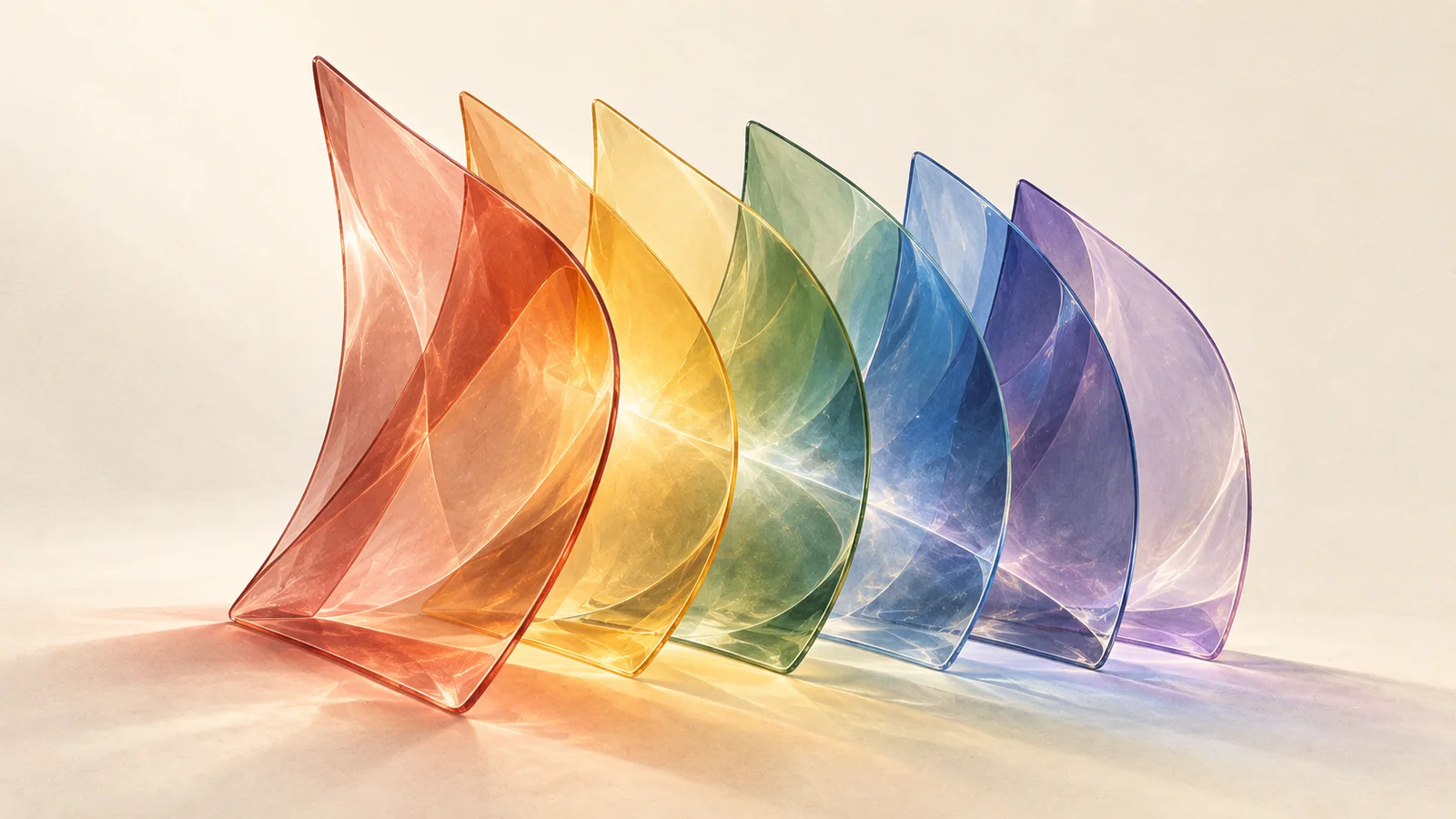
Some practitioners describe an aura as stacked layers, often seven, each named for a different kind of attention. Popular charts borrow rainbow order and, in many studios, the Root-through-Crown sequence. That stack is a memory palace. It is not a scan of tissue, and it is not a count this site can verify. Systems disagree about extra bands, names, and what a “thin” or “thick” layer would even mean. When a teacher uses layer talk, ask which diagram they are holding. Then decide whether the diagram helps you name a Tuesday, or only adds furniture you cannot check.
Color talk sits beside the layers, and this page keeps it short on purpose. The aura colors overview owns the chart and the longer meanings. A one-line tour is enough here: red for push and steadiness, orange for making and appetite, yellow for plans that finish, green for care, blue for clear speech, indigo for pattern, violet for a wider why, and white when those seven sit close together. Culture and memory can flip a color’s mood. If a line on a chart fights a real week, keep the week.
Aura color meanings at a glance
Scroll sideways to see every column. With a keyboard, focus the table and use the left and right arrow keys.
| Aura color | Energy theme | Meaning in this guide |
|---|---|---|
| Red | Root | You move first and think on your feet. |
| Orange | Sacral | You turn feelings into things people can see. |
| Yellow | Solar | You carry your own weather, and it is usually sunny. |
| Green | Heart | People feel safer when you are in the room. |
| Blue | Throat | You read the room before a word is spoken. |
| Indigo | Third Eye | You notice the pattern before anyone names it. |
| Violet | Crown | You look for the meaning under the moment. |
| White | Balance | No single color leads. All seven move together. |
How people describe sensing an aura
Ask a friend what is an aura in a crowded tram and you may hear “the weather they bring.” Some people describe a magnetic pull, a sudden ease, or a wish to step back — all before a sentence is finished. Forum threads sometimes reach for Jungian language and call that pull a presence. This site will not certify a collective unconscious. It will say the report is ordinary: humans read faces, posture, volume, and timing, then reach for a poetic noun. Write the scene (“coat-check went quiet”) rather than a rank (“powerful”). Rank-talk usually flatters the speaker.
Some practitioners describe a soft gaze at the edge of a hand or shoulder, or a warmth they notice when palms hover near a silhouette. If you try a looking pause, keep it short and indoor, and treat any tint as contrast, fatigue, or paint leaking around an outline. The companion drill on how to see auras boxes that curiosity. If you would rather name a theme from last week’s choices, how to find your aura color starts with a notepad instead of a haze. Neither method measures a field.
Take the free aura test →How to use an aura result
A result on this site is a dated checklist of agreements, printed as colors so the bars are easy to remember. Start with the full spread. Notice which two themes sit close, and which one is quieter than you expected. Ask which bars match a specific commute, argument, or finished task, and which bars match the person you wish you had been at work. Self-report follows the window you look through. A costume answer produces a costume picture. Honesty is the only quality control we have.
You do not need a weekly retake. Let a real calendar change happen first — a new shift, a finished term, a quieter season — then sit again if you still want the language. One growth prompt is enough: a sentence you will try, not a personality you will wear. If you share a picture with a friend, ask what felt true and what felt thin. Do not assign a bar to someone who did not ask. The example spectrum below is a reading habit, not a verdict about you.
Reading the full spectrum
Example result: Blue aura. Read the pattern, then check it against recent life.
- RedRoot
- 58 out of 100
- OrangeSacral
- 58 out of 100
- YellowSolar
- 58 out of 100
- GreenHeart
- 83 out of 100
- BlueThroat
- 92 out of 100, leading color
- IndigoThird Eye
- 75 out of 100
- VioletCrown
- 58 out of 100
Find the leading theme
Blue leads in this example. Start with its theme of expression, then ask where it appeared in your week.
Look at nearby scores
Green and Indigo are close behind. Read their themes alongside Blue instead of treating one color as the whole story.
Keep the full spectrum
A quieter theme is a reflection prompt, not a weakness. White is a near-even balance across seven dimensions, not an eighth score.
Scores use the test’s 0–100 scale. They are not shares of a whole and do not need to add up to 100.
What is an aura versus a chakra chart
A yoga-studio poster and a seven-bar quiz can share a rainbow and still be different instruments. What is an aura, in the Loretypes sense, is a reflective nickname for attention. A chakra chart, in a class, is often a timed drill for breath and focus. Taping the poster to the result and calling the pair a medical finding is how the two jobs smear. They borrowed a sequence from popular teaching. They did not borrow a laboratory. The longer split lives on aura colors vs chakra colors.
If you like both maps, keep two headings in the same notebook: “class” and “quiz.” Translate on paper when you want (“studio green was a care drill; quiz Green is a caretaking week”). Do not import blockage language into a bar chart this site never scored. Do not export a lead color into a claim about a vertebra. Dinner still works if one person prefers the poster and the other prefers the bars. The fight usually wants a worldview win, not a reservation.
When an aura snapshot can change
Can the picture move? Yes, in the snapshot sense: a later sitting can lead with a different theme when hours, load, or the question you answered have moved. That does not make the earlier caption a lie. A night-shift month and a desk-contract month can honestly disagree. Can your aura change is the page for timing, neighboring scores, and what not to blame on a new lead. Here, the only rule is to date the picture and keep the quieter bars in view.
Everyday examples help more than rarity lists. A launch week may lift follow-through. A funeral month may lift a wider why. A term of night feeds may lift care without erasing the planner you still are at noon. Write two scenes beside the two dates. If you cannot name the scenes, you are still in slogan territory. Slogans are allowed as entertainment. They are a poor reason to rewrite a friendship or a job.
What is an aura used to describe a person
What is an aura to describe a person? In ordinary speech it is a compact way to say how they occupy a space: brisk, soft, exact, playful, careful. You can do that work without a color wheel. If a color word helps, borrow one line from that overview and attach one memory (“blue because they named the missing invoice”). Two people can share a lead name for opposite reasons. The description is a sketch of a week, not a passport stamp.
Search also asks what is aura in a woman, as if a gender came with a separate field. This site does not split the metaphor that way. Presence, load, and manners are not issued by sex. A woman, a man, or anyone else can be described with the same seven questions about push, making, plans, care, speech, pattern, and purpose. Refuse readings that crown “feminine energy” or “masculine energy” as a hidden measurement. If someone did not ask to be sketched, keep the vocabulary on your own week.
Frequently asked questions about what is an aura
What does having an aura mean?
On this site it means you have a presence other people can talk about: mood, manners, and attention. Some teachers describe a field. We treat the phrase as a metaphor, not as proof that light surrounds the body.
How can I know my aura?
Compare two dated notes from the same week — a journal of recent choices and, if you want, a questionnaire — and look for overlap. A soft-gaze pause or a designed photo can join as a curiosity, not as a measurement.
What is aura in a woman?
The same reflective language as for anyone else. This site does not assign a separate feminine field, rank, or color. Describe a specific week of choices rather than a gendered essence.
What is an aura to describe a person?
It is a short way to name the weather they bring into a room — brisk, careful, playful — optionally paired with a color theme. Keep one real example in the sentence, and do not sketch someone who did not ask.
What is an aura in medical terms?
In clinic language, aura can name a warning sensation some people report before migraine or a seizure. That is a different use of the word from the reflective metaphor on this page. Symptom questions belong with a clinician.