How to Find Your Aura Color: 5 Methods
A practical, careful way to name a color theme from recent life — five methods, a phone caveat, and a dated snapshot, not a measurable field.
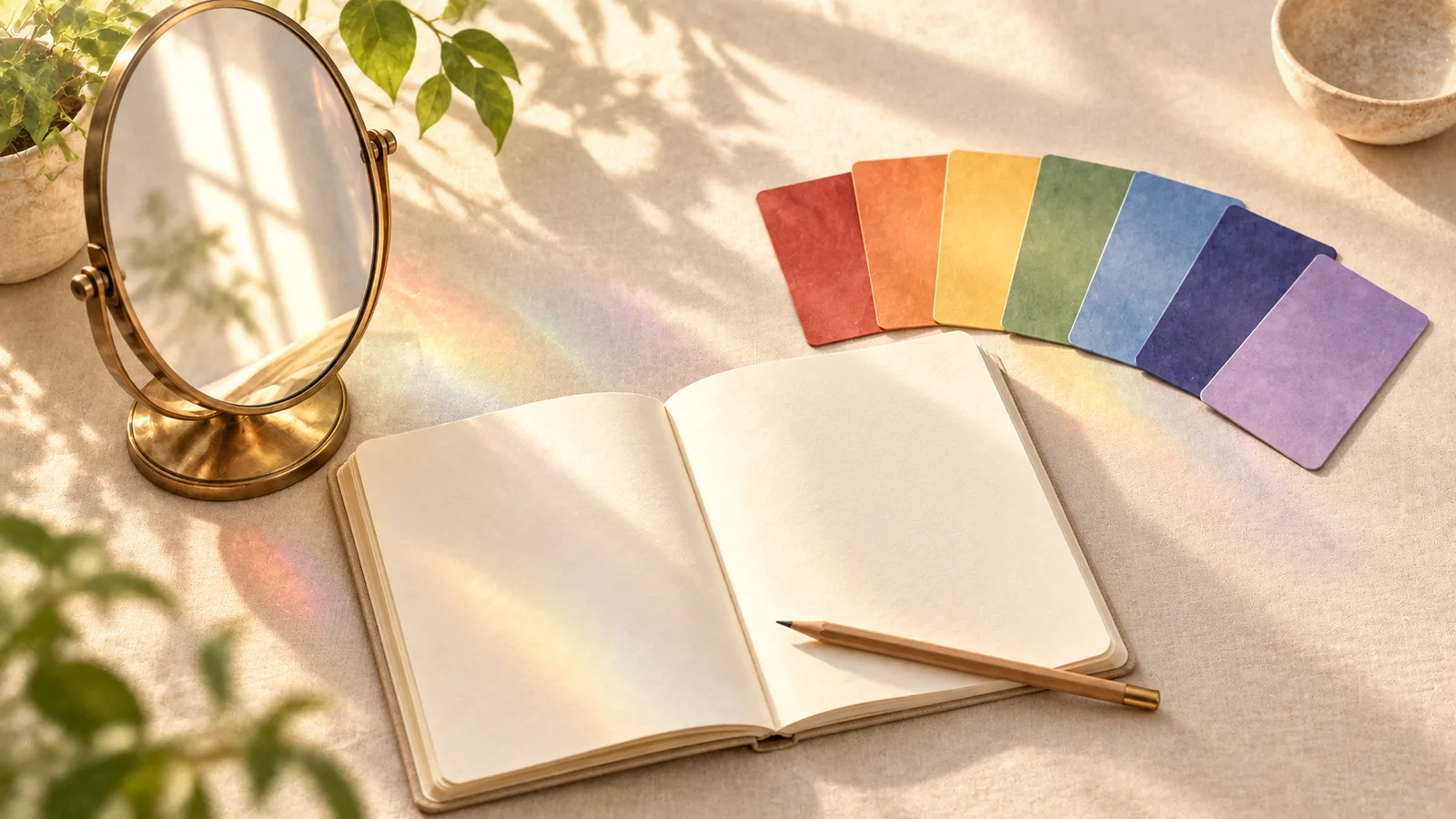
Five ways to explore aura color
These methods ask different questions. Compare the useful themes, and keep each method’s limits in view.
1. Quiet reflection
- Use it for
- Notice two themes from recent life.
- Keep in mind
- One mood can dominate; revisit on another day.
2. Mirror exercise
- Use it for
- Pause and explore a color association.
- Keep in mind
- Afterimages and contrast are not evidence of an energy field.
3. Aura photography
- Use it for
- Enjoy a creative portrait and discuss its themes.
- Keep in mind
- Colors depend on the device and practitioner, not a proven field.
4. Intuitive color choice
- Use it for
- Compare the color that feels present with one you need.
- Keep in mind
- Give a real-life reason for each choice; avoid favorite-color ranking.
5. Structured color test
- Use it for
- Give all seven themes consistent attention.
- Keep in mind
- A repeatable questionnaire still relies on honest self-report.
None of these methods establishes a measurable aura or offers a diagnosis.
How to find your aura color through quiet reflection
How to find your aura color, on this site, begins at the kitchen table rather than in a darkened corridor. Sit for five minutes with a cheap notepad. Skip the hunt for a literal halo. Ask what quality actually ran the last ten days: pushing a task through, making something, holding a plan, tending someone, saying the hard sentence, spotting a pattern, or reaching for a larger why. People who type what is my aura color into a search bar often want a single noun. Write two theme-words instead, and date the page.
Repeat the sitting on a different weekday. Mood loves a monopoly. A Tuesday that was all stamina and a Saturday that was all listening are both true; they are not a personality trial. When a word repeats, open the matching guide rather than a folklore ranking — the Blue aura guide if the week was about clear speech, for example. Skim the eight scored color pages only as a vocabulary list. One sentence from a color page plus one memory from your notes is enough. A paragraph of traits is already too much for this method.
How to see your aura color in a mirror pause
Some practitioners describe a soft gaze around the outline of a hand or shoulder in even, indoor light. If you try it, keep the session short. Relax the eyes; do not stare until the room tilts. Contrast, afterimages, a colored wall, and fatigue can all paint an edge that feels meaningful. That edge is a visual event in a specific bathroom, not evidence of a field you can measure. Name the first color word you associate with the pause, then stop.
If the exercise feels like a contest, it is the wrong tool. How to see auras as a looking drill lives in a companion guide; this page is about naming a personal theme. Use the mirror as a timer for attention. Journal why that color word showed up (“the navy towel was in frame,” or “I have been the one booking the appointments”). Eye strain is a stop sign, not a sign you are getting closer.
Aura color meanings at a glance
Scroll sideways to see every column. With a keyboard, focus the table and use the left and right arrow keys.
| Aura color | Energy theme | Meaning in this guide |
|---|---|---|
| Red | Root | You move first and think on your feet. |
| Orange | Sacral | You turn feelings into things people can see. |
| Yellow | Solar | You carry your own weather, and it is usually sunny. |
| Green | Heart | People feel safer when you are in the room. |
| Blue | Throat | You read the room before a word is spoken. |
| Indigo | Third Eye | You notice the pattern before anyone names it. |
| Violet | Crown | You look for the meaning under the moment. |
| White | Balance | No single color leads. All seven move together. |
Aura photography, phone apps, and a portrait that is still a picture
Studio aura portraits usually combine sensor inputs with software that assigns a palette. The image can be a lovely souvenir. The legend printed on the border belongs to that booth and that operator. Ask what the sensors actually record, how colors get mapped, and whether two sittings an hour apart can disagree. A disagreement is common. It does not mean your character flipped in the parking lot.
Phones are the version most people meet first. An iPhone filter, an Android camera app, or a “aura photo” overlay is doing photography plus color grading. Skin, shirt, window, and white-balance settings do most of the work. How to find your aura color with a phone is therefore a design question: which look did the software apply, and does that look rhyme with the week you actually lived? Save the image if you like it. Do not use it for health, hiring, money, or a fight. Compare one theme from the portrait with one line from your notepad. If they clash, believe the notepad.
How to find your aura color with an intuitive swatch choice
For colors you enjoy combining rather than symbolic energy themes, try the color season quiz. The two activities ask different questions, so neither result confirms the other.
Lay out seven cheap swatches: red, orange, yellow, green, blue, indigo, violet. Do not rank favorites. Ask which patch feels like the energy you have been bringing, then which patch feels needed. The split is the useful part. “Yellow feels present because I kept the launch calendar; green feels needed because I skipped two check-ins” is a better sentence than “I am a yellow person.”
Write those two sentences before you tidy the table. Intuition without a reason slides into favorite-hoodie logic. If a later questionnaire names a different lead, you still have the swatch notes. They are evidence of association, which is allowed. They are not a court exhibit.
How to check your aura color with a structured questionnaire
A questionnaire is how to check your aura when you want every theme to get the same number of chances. Loretypes uses 21 statements, three for each of seven dimensions. You rate them from strongly disagree to strongly agree. Scores add by dimension; the strongest name leads; a near-even sitting prints as White, which is balance on that day, not a rarer species. The aura color test is free, takes about three minutes, and does not need an account.
Answer from typical recent behavior, not from the colleague you wish you were. A structured sitting is still self-report. Its gift is repeatability: you can date the screenshot and sit again after a real calendar change. Its limit is honesty. If you perform the “spiritual” answers, you will get a costume. Keep the full bar chart. A quiet second color is often the sentence that makes the week make sense.
Take the free aura test →How to find your aura color when methods disagree
They will disagree, and that is information. Reflection remembers. The mirror associates. The booth and the phone render. The questionnaire tallies agreements. How to find your aura color in that mess is to hunt for overlap, not for a winner. If three methods mention listening, read the Blue page and stop collecting names. If the booth printed gold and the questionnaire printed Orange, translate the souvenir into a scored theme instead of inventing a ninth result.
Search lists love rarity. White, Black, Pink, Purple, Gold, and Rainbow trend because scarcity sells. This site scores seven themes plus White as an even spread; satellite pages exist for some extra names. For the folklore ranking, use the rarest aura colors and then come back. A lead that feels ordinary is still a usable snapshot. Your aura color can move when the week moves; that is a reason to date the page, described more fully in can your aura color change. Keep what helps you talk about a real situation. Set aside what needs a crown.
Keep a short aura color observation journal
For seven days, log one surge, one snag, and one choice. At the week’s end, tick which of the seven themes showed up. You now have a tiny behavior record to set beside a swatch sitting or a questionnaire. That record also blocks the habit of judging a whole character from one dramatic Thursday.
Notice the quiet ticks as well as the loud ones. A lead that appears often still shares the week with other muscles. If you sit for the questionnaire after the log, answer from those seven days. Caption the result with the date. Repeat only after something in the calendar actually changed — a finished term, a new shift, a move — not because a rainy Sunday felt unlabeled.
Frequently asked questions about how to find your aura color
How can I see my aura color?
You can try a brief, soft-gaze pause in even indoor light, then write the first color word you associate with the moment. Edges and tints can come from contrast, afterimages, or the room, so treat the note as a private prompt. For a looking drill with a timer, use the companion seeing guide rather than staring until your eyes hurt.
How can I check my aura?
Check it the way you would check a weather report: compare two methods from the same week, such as a dated journal and a questionnaire, and look for overlap. A booth portrait or phone overlay can join the comparison as a picture, not as a measurement. Keep the quieter scores in view.
How to check aura color with phone?
On iPhone or Android, camera apps and filters apply a look to a photograph. They do not read a field. If you enjoy the image, ask whether its theme matches a specific day in your notes. Lighting, clothing, and white balance usually explain more than the legend on the sticker.
What is the rarest aura type?
This site does not run a census. White is the even-spread result when seven scores sit close together. Names like Black, Pink, Purple, Gold, and Rainbow belong to search folklore or satellite pages, not to extra quiz trophies. Rarity talk is a poor reason to retake a sitting.
Can I find my aura color without a questionnaire?
Yes. A two-theme journal, a swatch choice with written reasons, or a careful photo comparison can all name a working color word. Keep the conclusion dated and specific, and switch methods if one of them only produces strain or costume answers.