What Color Is My Aura?
If you have ever asked "what color is my aura?", this free 21-question test gives you a visual answer. Rate short statements about daily life to see which of seven scored colors leads, plus White when the spectrum is balanced. The result is not a label or prediction. It is a visual reflection of qualities you recognize right now, with room to notice what feels true and what you may want to strengthen.
21 questions·about 3 minutes·free, no sign-up
What you'll learn from your aura color
- Your dominant aura color, what its central theme means, and why that energy may lead today
- How your answers spread across seven dimensions instead of disappearing behind one simple personality label
- Practical strengths connected to your leading color that you may already use in everyday situations
- Growth prompts and neighboring colors that can balance, support, or broaden your strongest qualities
Example result: Blue aura
An illustrative result from fixed example answers, not your personal result.
You read the room before a word is spoken.
- RedRoot
- 58 out of 100
- OrangeSacral
- 58 out of 100
- YellowSolar
- 58 out of 100
- GreenHeart
- 83 out of 100
- BlueThroat
- 92 out of 100, leading color
- IndigoThird Eye
- 75 out of 100
- VioletCrown
- 58 out of 100
Scores use the test’s 0–100 scale. They are not shares of a whole and do not need to add up to 100.
The eight auras
Each aura color highlights a different way of acting, relating, or finding meaning; explore aura colors meaning to compare all eight before reading your complete personal spectrum.
How the aura test works
- 1
Rate 21 clear statements in this aura quiz from strongly disagree to strongly agree, choosing the response that feels most accurate right now for you.
- 2
Your answers are added across seven energy dimensions using the same scoring rules, then compared to identify a leader or a closely balanced White result.
- 3
You receive a free visual result showing your dominant color, complete spectrum, practical strengths, growth prompts, and related color guides you can explore in depth.
Learn more about aura colors
What Is an Aura?
Learn what an aura means in color psychology and chakra traditions, including seven layers and common color meanings.
Read the guide →
How to Find Your Aura Color: 5 Methods
Learn how to find your aura color with five simple methods, from reflection and a mirror exercise to an aura color test.
Read the guide →
How to See Auras: A Beginner's Practice
How to see auras as a beginner's practice: side light, a pale wall, a two-minute timer, and a notebook. A looking drill, not a measurement.
Read the guide →
Can Your Aura Color Change?
Can your aura change with mood, a new job, or a quieter season? Compare dated snapshots and eight color guides without treating either sitting as a lie.
Read the guide →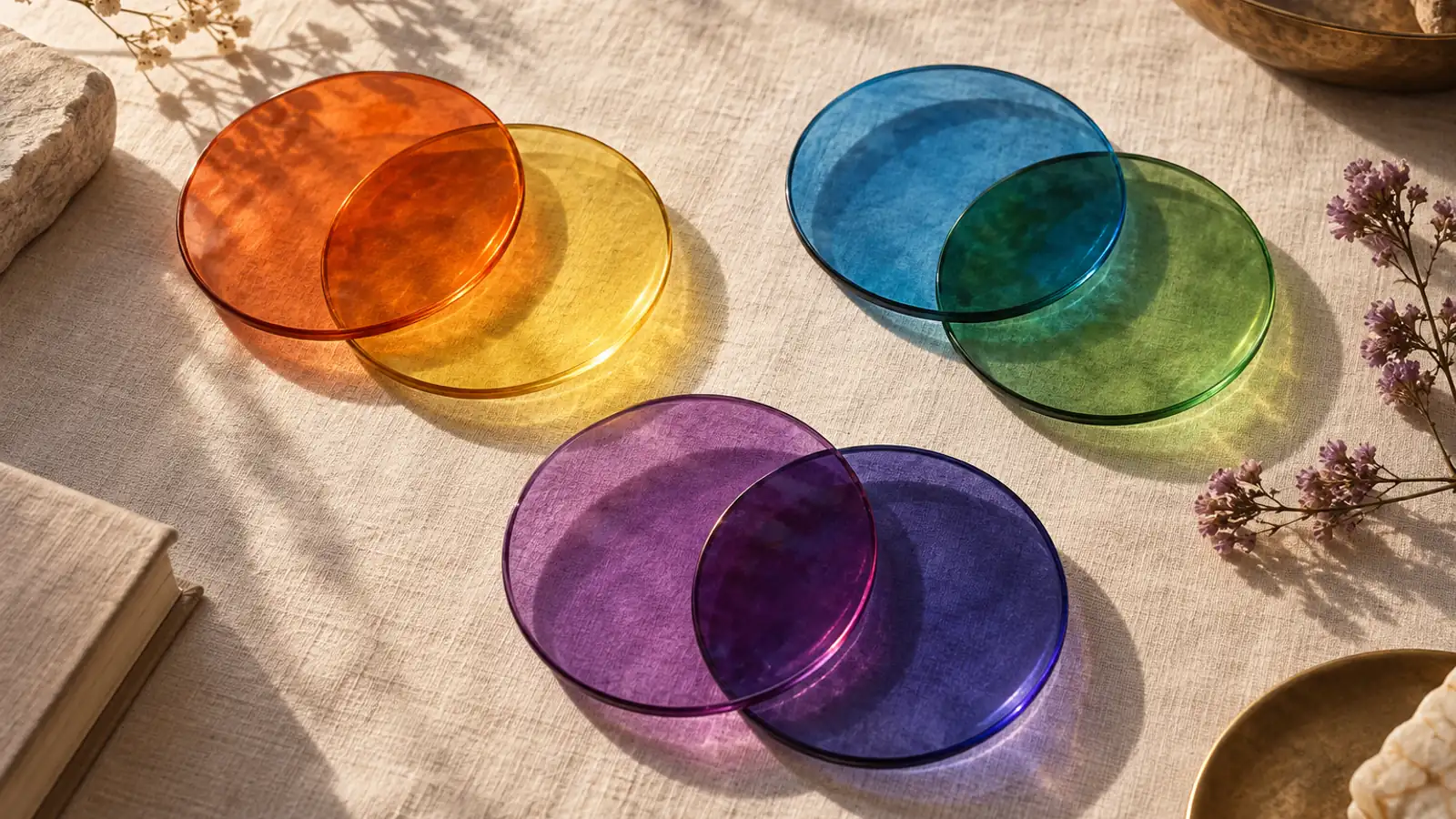
Aura Color Compatibility: Which Colors Click
Aura color compatibility from the eight scored pairings: which colors click as roommates or bandmates, and how unlisted pairs still share a kitchen.
Read the guide →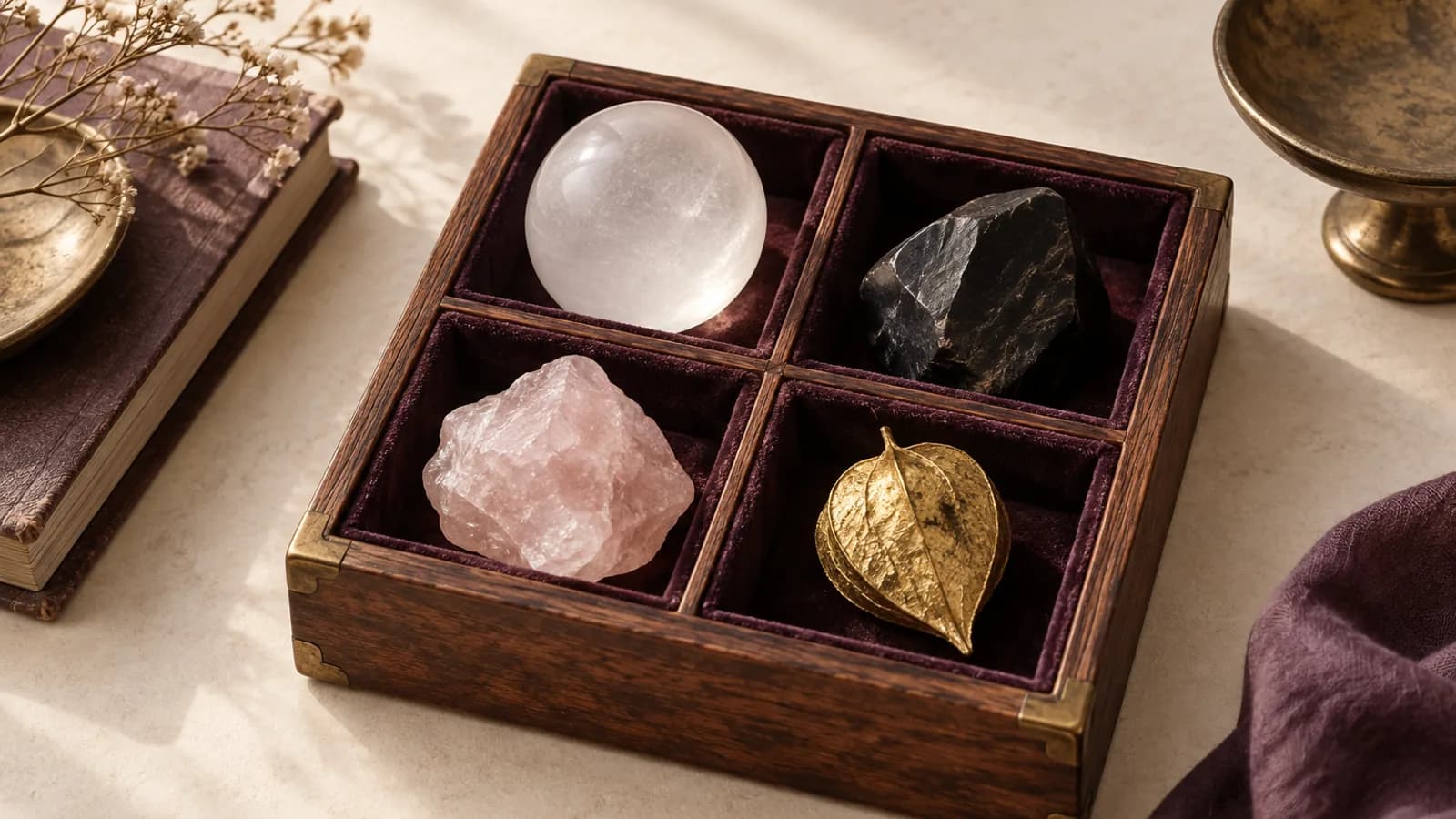
The Rarest Aura Colors and What They Mean
The rarest aura color searches — White, Black, Pink, Purple, Gold, Rainbow — and how they map to scored pages or satellite guides on this site.
Read the guide →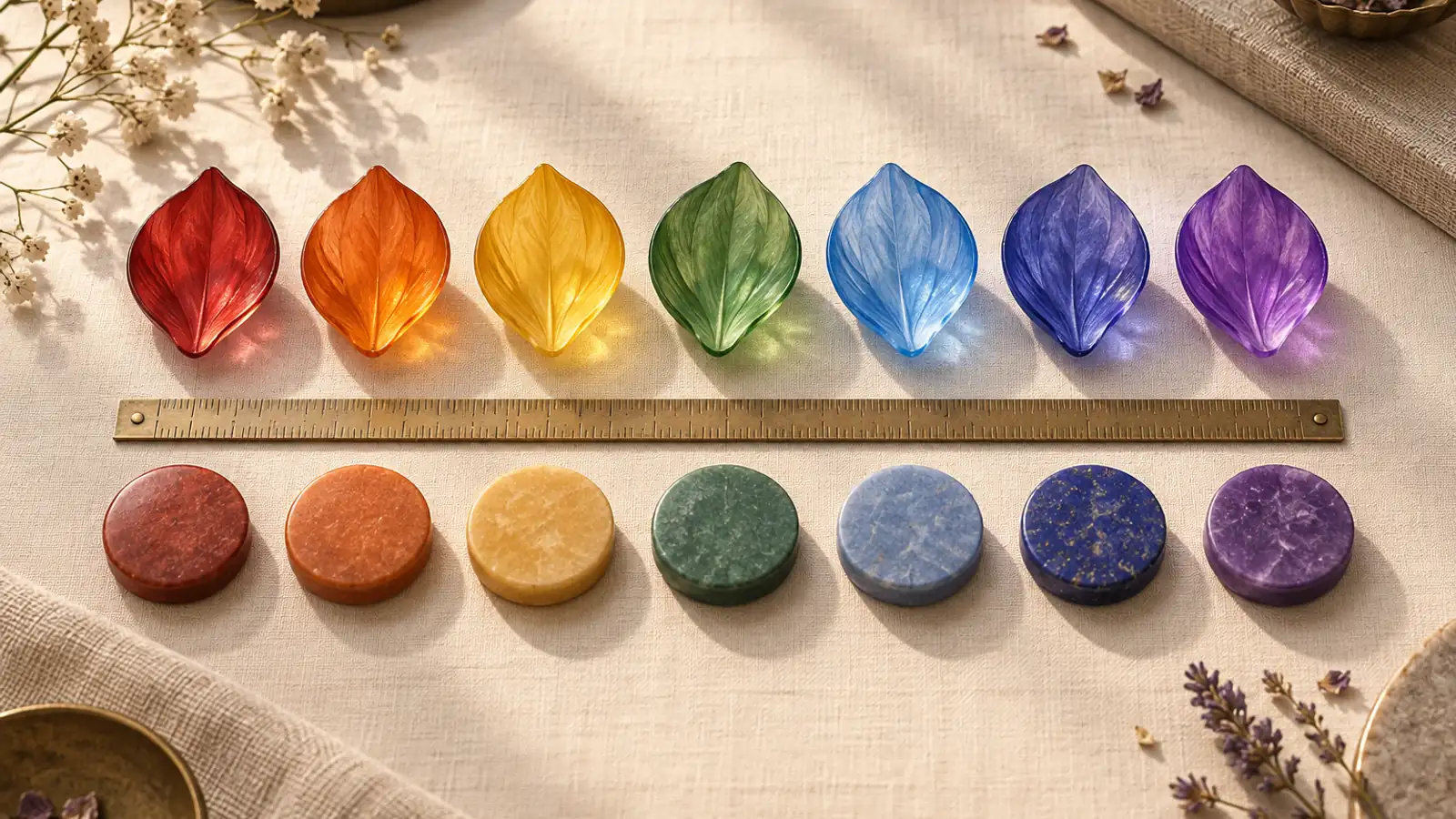
Aura Colors vs Chakra Colors: What's the Difference
Aura vs chakra: two color systems on one desk, how this quiz maps seven themes, and how to keep a studio poster from fusing with a bar chart.
Read the guide →Aura colors and meanings chart
Compare the energy theme, core qualities, and one-line meaning of all eight aura colors.
Explore the chart →If you want to explore the colors you enjoy wearing or combining, try the color season quiz as a separate palette preference exercise.
How this test answers "what color is my aura?"
Each question connects to one of seven familiar energy themes: Root, Sacral, Solar, Heart, Throat, Third Eye, and Crown. Your answers are grouped into those dimensions, then compared using one consistent scoring method. The strongest dimension becomes your dominant color. When all seven scores sit very close together, the result is White, representing balance rather than an eighth scored dimension.
A color result is most useful as a prompt for reflection. Red may point toward action and stability, while Orange centers creativity and connection. Yellow reflects confidence and focus; Green emphasizes care and trust. Blue is linked with honest expression, Indigo with intuition and pattern recognition, and Violet with purpose and a wider view. None is better than another, and every result includes the complete seven-part spectrum.
Read the full method
Your answers describe this moment, not a permanent identity. Habits and circumstances can change, so a later result may shift as well. Read the summary, notice the strengths that feel familiar, and treat the growth suggestions as invitations rather than instructions. Explore every color guide to compare themes and see how neighboring colors complement one another.
For a grounded reading, compare the result with examples from the last few weeks. Ask where the leading quality helped, where it became too strong, and which quieter energy could have supported it. This keeps the experience connected to choices you can observe. The aim is not to agree with every sentence; it is to find one or two useful questions that make your own patterns easier to name.
Frequently asked questions
How is the aura color determined?
The test adds three answers within each of seven energy dimensions, then compares those totals using one consistent scoring method. The strongest dimension leads; if all seven scores are very close, the balanced result is White.
Can my aura color change?
Yes. Your answers reflect how you see your habits, priorities, and reactions today. Those patterns may shift with new circumstances or practice, so a later result can highlight a different leading energy without making either result wrong.
Is this test scientific?
No. The quiz draws on color psychology and chakra traditions as a framework for self-reflection and entertainment. It does not measure a physical aura and should never replace medical, psychological, or other professional advice.
What does a white aura result mean?
A White result means your seven dimension scores sit within a narrow range, so no single scored color leads strongly. It represents an even blend of energies, not a separate eighth dimension or a better result.
How long does the test take?
Most people finish all 21 questions in about three minutes. There is no timer, so you can move at your own pace, but choosing your first honest response usually keeps the experience simple and intuitive.
Do I need an account?
No. You can answer every question and read the complete result without registering or paying. Your result includes the leading aura color, the full seven-energy spectrum, strengths, growth prompts, and links to related guides.
Is this an aura quiz or an aura test?
Both names describe the same 21-question experience. Whether you call it an aura quiz, aura test, aura color quiz, or aura color test, the scoring compares seven energy dimensions to show your leading color and full spectrum.
What color is my aura if two colors score almost the same?
The slightly higher score becomes your dominant color, while the nearby score remains visible in your complete spectrum. Reading both color guides can reveal complementary qualities and give you a more nuanced reflection than the leader alone.
Can I retake the test, and will my aura color change?
Yes, you can retake it whenever you want. A result may change because your circumstances, habits, or self-perception have shifted, or because you answer a close question differently. Treat each result as a snapshot, not a permanent identity.
Still wondering what color is my aura? Three minutes is all it takes.