How to See Auras: A Beginner's Practice
A two-minute looking drill: side light, a pale wall, a kitchen timer, and a notebook — not a promise that a glowing field will appear.
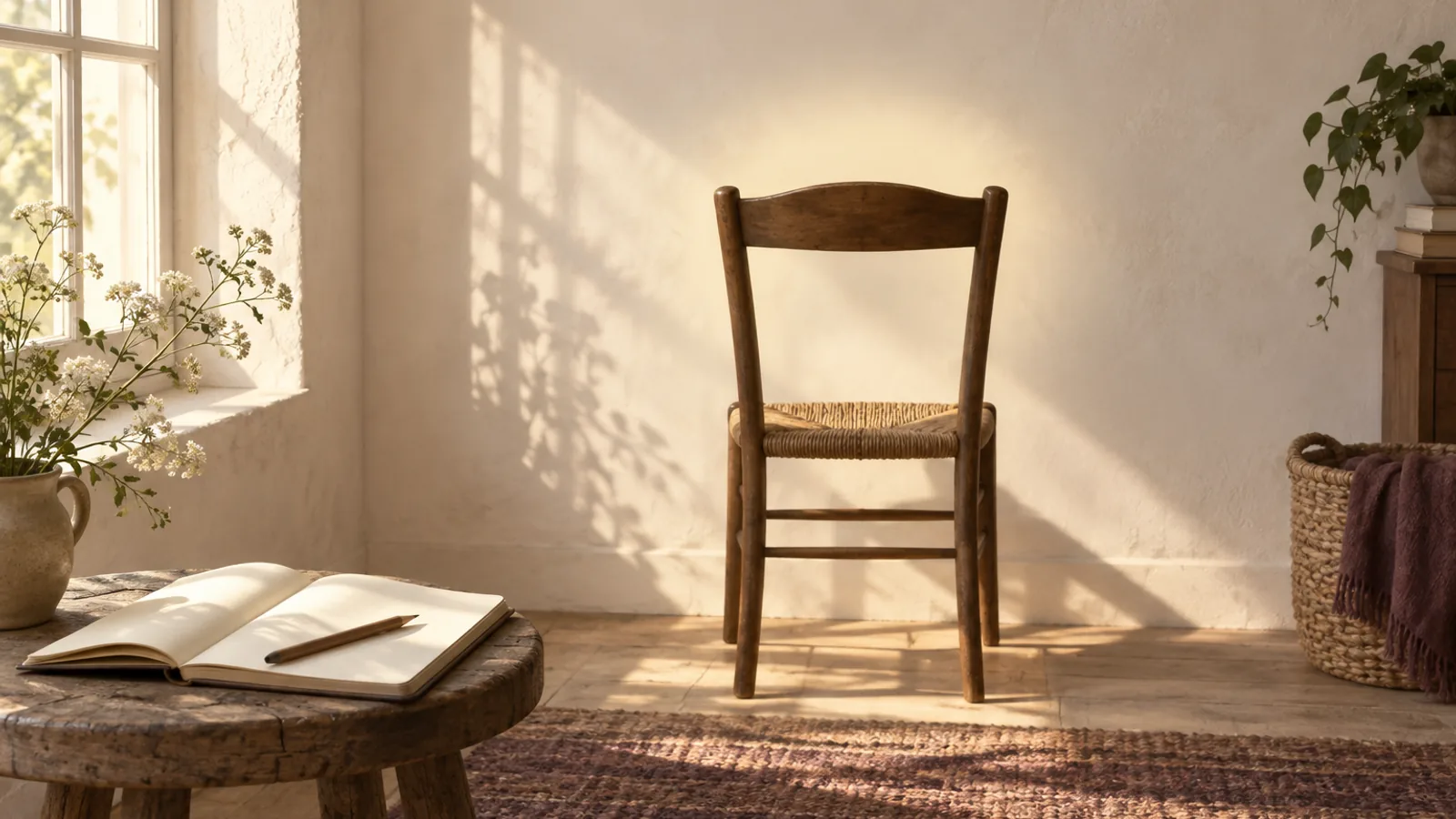
Pale walls, side windows, and a two-minute box
Late afternoon in a rented studio is a better classroom than a dark hallway. Put a rubber plant, a coat on a hanger, or your own hand against an eggshell wall. How to see auras in this room is a looking drill, not a séance: sit so the window sits to your left, set a kitchen timer for two minutes, and let the outline go slightly fuzzy. A hard fluorescent ceiling flattens edges; a phone flashlight punches a false halo. If you would rather skip vision entirely and start from habits, the companion guide on how to find your aura color is the better door.
Move posters, fairy lights, and neon stickers out of the frame before the timer starts. A blue print on the wall will leak into your notes and convince you the outline was blue. Tomorrow, use the same hour and the same wall. Repeatability matters more than a dramatic first try. Keep the free aura color test for a later sitting if you want a structured snapshot after the looking drill, not as a substitute for the two-minute box.
How to see auras with a soft, side glance
How to see auras with peripheral vision means you do not stare at the silhouette. Pick a thumbtack, a pencil mark, or a small scuff a few inches beside the plant. Rest your eyes there. The outline may seem to thicken, shimmer, or pick up a faint tint. That tint can be contrast, fatigue, or the wall color leaking around the edges. Name it as a guess: “pale gold at 4:10 p.m., west window, overcast.” Then let the timer end the scene so you do not keep adjusting until you invent a rainbow.
If your eyes water or the room tilts, you have gone past useful practice. Blink, look at a distant rooftop, and stop for the day. People who treat how to see auras as an endurance contest usually collect headaches, not insight. A useful session is boring on purpose: same chair, same plant, same two minutes. After three days you will have a small stack of guesses to compare, which is the whole point of the drill.
Take the free aura test →Keep a seeing log instead of a legend
Use a cheap memo pad, not a decorative journal you are afraid to mark. Each line gets four fields: clock time, weather or bulb, subject (plant, hand, roommate’s shoulder), and the first color word. Do not add a story on day one. If Tuesday says “cool green” and Thursday says “dusty peach,” that disagreement is data. You can later set those notes beside a color page such as the Violet aura guide to see whether a word you used matches a theme you already recognize in daily life.
Skip photographs for the first week. A phone camera adds its own white balance and will argue with your memory. If you want a chart of scored themes after the log exists, open the aura colors chart and ask which names you actually wrote down. The log is a seeing record. The chart is a vocabulary list. Mixing them too early turns every tint into a personality slogan.
What an edge tint is not telling you
An outline that looks brighter than the wall is not proof of health, talent, or a hidden gift. It is a visual event in a specific room. How to see auras as a beginner’s practice stays honest when you refuse medical or moral conclusions. If a guest wants you to “read” them at a dinner party, decline. Looking at a plant is a private drill. Assigning a color to someone who did not ask is a different act, and it usually serves the speaker more than the subject.
Afterimages are common when you stare, then look at a blank door. A green afterimage after a red lamp is a textbook trick of the eye, not a second layer of meaning. If your notes keep matching the lamp, the poster, or the shirt in the scene, believe the furniture. The drill still has value: it slows you down, trains attention, and gives you a ritual for asking what color word you associate with a moment — which is already closer to reflection than to spectacle.
Practice beside a plant, not a glowing screen
Screens pump saturated edges all day. Trying how to see auras on a laptop bezel teaches you about pixels. Step away from the monitor, wash a mug, and use the rubber plant or a pale mug against the same eggshell wall. Outdoor practice works at dusk against a light fence, not at noon on a chrome railing. Wind that moves leaves will make the outline jitter and invite invention. Choose still objects until the two-minute habit feels ordinary.
A roommate walking through the frame is a gift if you already have the timer running, and a distraction if you chase them down the hall. Ask permission if a person is the subject. Then keep the same side glance you used on the plant. After the beep, write one color word and one sentence about the light, not a character analysis. If you want a personal theme rooted in behavior rather than vision, park the drill and take the free aura color test on another day.
When to stop looking and switch methods
Three to five sessions are enough to know whether the drill is calming or merely frustrating. If every sitting ends in eye strain, you have the answer: this is not your method. Switch to the five practical routes in how to find your aura color, which start from recent choices instead of from outlines. How to see auras can remain a curiosity you revisit in good daylight without becoming a weekly obligation.
If the log shows the same two color words across different hours, you have a stable association worth writing about. Take those words to a guide — perhaps Blue aura meaning if “clear speech” was the theme behind the tint you kept naming — and test them against a real conversation from the week. The seeing drill ends where a specific memory begins. That handoff is the success, not a more cinematic halo.
Continue exploring with the how to find your aura color methods, the free aura color test, and the Blue aura guide.
Frequently asked questions about seeing auras
Can anyone learn how to see auras?
Anyone can try a short looking drill in ordinary light. What you notice may be contrast, fatigue, or association rather than a measurable field, so treat the notes as a private practice, not as proof.
What lighting works best for a first session?
A single side window, a pale wall, and two minutes on a timer beat overhead fluorescents, phone flashlights, and dark hallways. Repeat at the same hour so the light is comparable.
Should I stare at the outline until a color appears?
No. Staring manufactures afterimages. Rest your gaze on a nearby scuff or thumbtack and let the session end when the timer ends, even if nothing dramatic happens.
How is this different from finding my aura color?
Seeing practice is about looking and logging. Finding a personal color theme is about behavior, comparison, and a structured snapshot. Use the looking drill first only if you enjoy it; otherwise start with the methods guide or the test.